Welcome
These courses are administered and sponsored by the Oregon Academy of General Dentistry
(OAGD).
This course meets or exceeds the American Dental Association’s Guidelines for the Use of Sedation and General Anesthesia by Dentists. It is a 115-hour course and includes a total of 69 hours of didactic education and 46 hours of clinical education.
Why should I attend this course?
All didactics are in-person. While watching pre-recorded videos may be convenient and cheaper, as most programs do, it pales in comparison to being live in a room and able to ask questions as you think of them in real-time, of world-class experts. In the clinic, you will review patients’ medical histories, start the IV, administer sedative agents, and do dentistry. Just like you’ll do in private practice.
Sharing patients as many courses do; one starts the IV, someone else titrates medication, and someone else does the dentistry - and all three of you count the case is cheaper, no doubt, but it is a disservice to you and does not follow the ADA guidelines, nor will that training be accepted in many states.
We start at 8:00 AM sharp each day for the didactic sessions. We finish at 5 PM on Thursday through Saturday and at 1 PM each Sunday. The clinic has long days, generally from 6:00 AM until 7:00 PM. We provide breakfast and lunch for you and your assistants each day of the course for both didactics and clinic.
This is the only IV sedation course where all faculty are American Dental Board of Anesthesiology (ADBA) board-certified dentist anesthesiologists.
Most IV sedation courses have no dentist anesthesiologist on their faculty. We provide real-world, evidence-based recommendations from faculty who do this daily and are experts in sedation and anesthesia for dentistry. This isn’t a sideline for us; we don’t do dentistry as our primary job and just dabble in sedation or work in the OR and teach sedation to dentists as a side job for extra money. We are truly educators with one goal: to make the doctors we train better and safer. We are the only non-profit doing this, every other course out there is, first and foremost, a for-profit entity. We think you’ll be able to tell the difference!
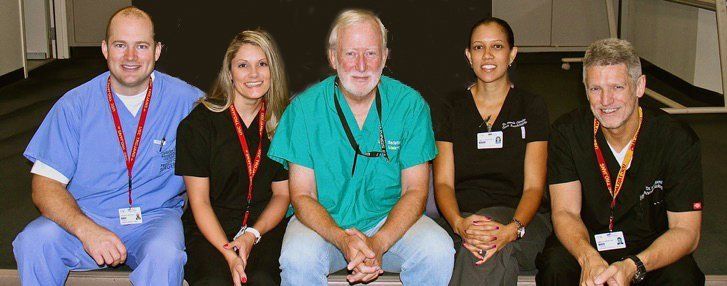
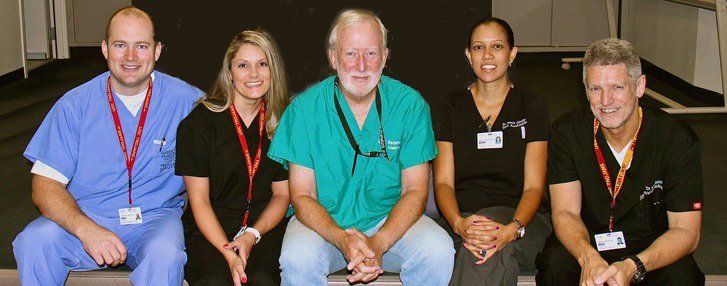
All faculty except Dr. Malamed, who retired from USC over a decade ago, perform the full spectrum of anesthesia and sedation for dentistry. Dr. Malamed literally wrote the book on sedation for dentists.
Drs. Fonner and Brady served on the Board of Directors of the American Dental Society of Anesthesiology (ADSA), with Dr. Brady serving as the Vice-President. Dr. Reed is a Past President of the ADSA. Drs. Fonner and Brady are Past Presidents of the American Dental Board of Anesthesiology (ADBA). Dr. Reed is the President of the ADBA. Drs. Fonner and Brady are the co-authors, and Dr. Reed is a contributor to the ADSA’s Ten Minutes Saves a Life® app.
Drs. Fonner and Brady are attendings in a dental anesthesiology residency. Dr. Okundaye is an Associate Program Director, and Dr. Reed is a Dental Anesthesiology Residency Program Director. Drs. Reed, Malamed, Okundaye, Fonner, and Brady have all been published in multiple peer-reviewed journals and textbooks.
This faculty has published more than the faculty from all other IV sedation courses put together.
Dr. Malamed has taught IV sedation to dentists for over 50 years. Drs. Malamed and Reed have taught IV sedation together for over 30 years. 2025 marks the 25th year that we have been providing this course, sponsored by the Oregon Academy of General Dentistry (ORAGD). In the first year, Dr. Reed taught the entire course. Dr. Malamed joined in the second year. Dr. Okundaye has taught this course for almost 20 years, and Drs. Fonner and Brady have taught this course for over a dozen years each. Dr. Kobernik has come full circle, first attending this course as a general dentist in 2012, then attending a dental anesthesiology residency, and now teaching in the course. As you can see, the faculty is very experienced, amazingly accomplished, and outstanding.
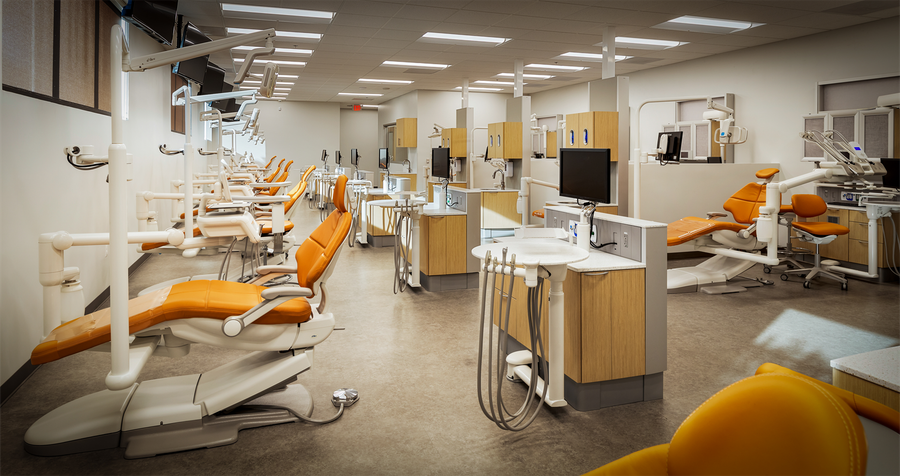
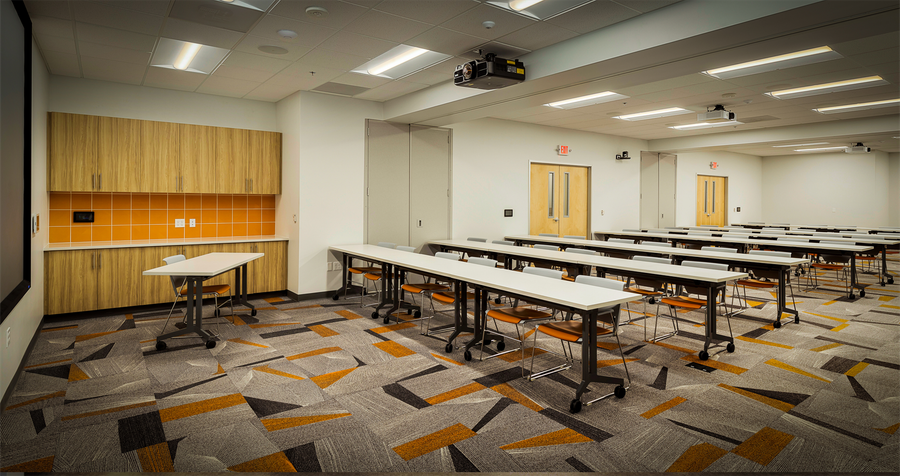
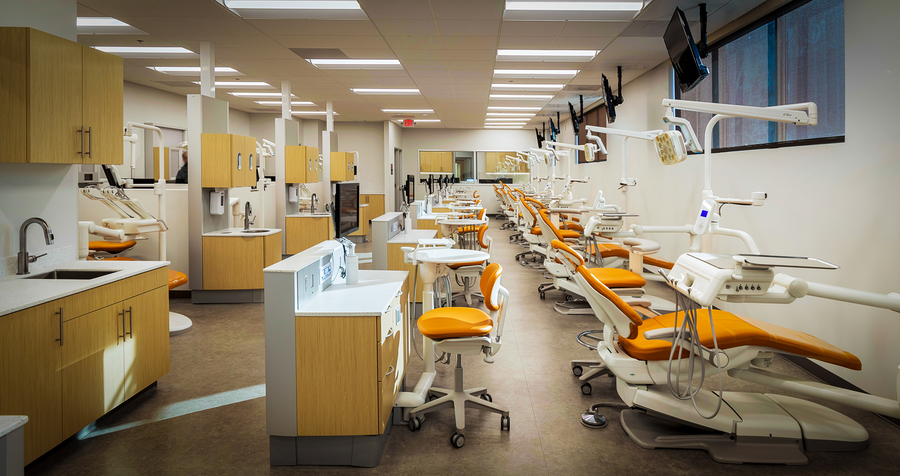
The facility is amazing, too. The Oregon AGD built this facility just a handful of years ago specifically to provide high-quality continuing education in dentistry. It has a state-of-the-art lecture room and a completely up-to-date clinic. There truly is no other course that comes close to what we provide.
The Oregon AGD works with the Oregon Board of Dentistry to get all course participants a temporary license to practice dentistry and perform parenteral moderate sedation that is good for the clinical course dates. This is based on your dental license being in good standing in your state and with no restrictions or other limitations. All of our faculty have either a permanent or temporary license in Oregon as well. The ORAGD has appropriate professional malpractice insurance. To protect yourself, it is important that you and the faculty teaching are licensed in the state where the clinical component occurs and where there is adequate professional malpractice insurance in place.
Pediatric patients will not be treated in this course nor do we advocate parenteral moderate sedation for patients under the age of 16.
Critical Information for All Courses:
Doctor requirements prior to enrolling:
- A valid license to practice dentistry in at least one US state or Canadian province
- Current Healthcare Provider BLS (CPR)
- Current ACLS (Advanced Cardiovascular Life Support)
- Current DEA permit allowing the subscription of Schedules II/IIN through V
- Appropriate malpractice insurance
You must bring at least two dental assistants
for the entirety of the clinic sessions. Also, you are strongly encouraged to bring your assistants for all of the didactic sessions. They will benefit from this information and there is no additional tuition charged for your first two assistants. If you wish to bring additional assistants, a small fee will be assessed that only covers our expenses.
You will be completely comfortable with and prepared to go back to your office and sedate and treat patients. This course is very well organized due primarily to the excellent quality of faculty and staff we have been able to secure.
Note: During the clinical portion of the course each participant is required to to bring all armamentarium/supplies required to treat patients.
These are long days! The didactic days are eight hours each and the clinic days are between ten and fourteen hours each. For as long and difficult as this course is, it is also a lot of fun and it is a “good tired” that you'll feel each day.
NOTE:
The Guidelines for Teaching Pain Control and Sedation to Dentists and Dental Students, 2016
states: "The course director must certify the competency of participants upon satisfactory completion of training in each moderate sedation technique, including instruction, clinical experience, managing the airway, intravascular/intraosseous access, and reversal medications."
Each participant must be 100% clear that there is a possibility that if they do not perform satisfactorily during the course that the course director may not be able to write a letter to their state board stating that they are competent in parenteral moderate sedation and airway management. All participants will get the CE hours, but participants may not get a statement of competency from the course director.
Tuition: $19,500